

Ready to transform your email strategy?
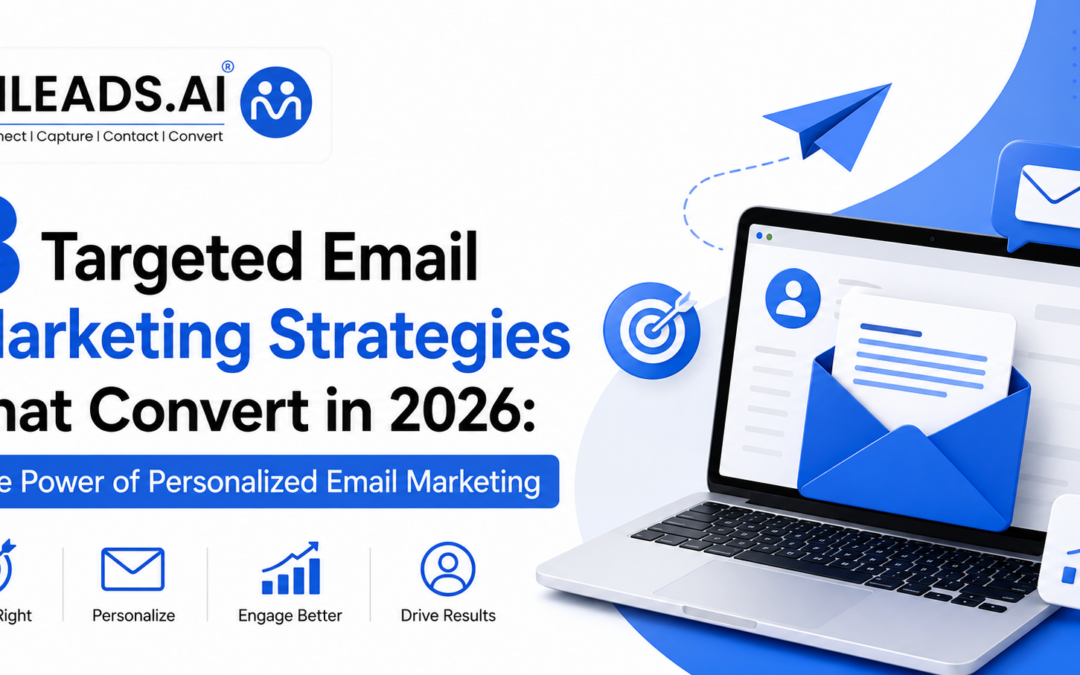
8 Targeted Email Marketing Strategies That Convert in 2026
The Power of Personalized Email Marketing
Imagine waking up to an inbox that actually understands you. Not one cluttered with generic sales pitches or desperate “We miss you!” subject lines, but an inbox that feels like a curated feed of thoughtful notes from friends and brands you genuinely care about.
This is the reality of the digital landscape today. For businesses trying to cut through the noise, harnessing the power of personalized email marketing is no longer a luxury reserved for the elite; it is the absolute baseline for survival.
Consider the story of Marcus, a boutique fitness brand founder who spent years blasting his entire subscriber list of twenty thousand people with the exact same weekly newsletter. Every Tuesday at nine in the morning, his subscribers received a massive digest featuring protein powder discounts, heavy lifting tips, and yoga studio updates. Over time, his open rates plummeted to an abysmal single digit. The problem wasn’t his content; it was his approach.
By pivoting his focus toward a highly targeted email marketing strategy, Marcus stopped treating his audience as a monolith. Instead, he began sending tailored, behavior-driven content. Within four months, his conversion rates tripled.
If you want to achieve similar results, you need to throw out the old playbook. Let’s explore eight targeted email marketing strategies that actually convert today, built around real human connection and modern data practices.
1. Move From Static Calendars to Behavioral Triggers
For decades, marketers relied on static calendars to dictate when emails were sent. We believed that sending a blast on a Tuesday morning was a universal truth of success. Today, that approach is hopelessly outdated. The most successful campaigns are built around real-time user actions, relying on robust email marketing automation to trigger messages exactly when a subscriber is most engaged.
When a user visits a specific product page three times in forty-eight hours, that action should trigger a highly targeted response. This isn’t about stalking your audience; it’s about meeting them at their point of high intent. A gentle, helpful email offering more information or a customer review of that specific product feels like helpful customer service, whereas a generic promotional blast feels like spam.
By shifting your focus to behavioral triggers, you ensure that every email has an immediate, logical reason for landing in the inbox. This behavioral alignment forms the absolute foundation of successful personalized email marketing, changing the conversation from a brand shouting into the void to a natural, two-way dialogue.
2. Leverage Zero-Party Data Through Conversational Profiling
We are living in an era where third-party cookies have vanished, and privacy regulations are tighter than ever. This shift has forced brands to change how they gather insights. Instead of guessing what your subscribers want based on invasive tracking, the smartest strategy is remarkably simple: just ask them.
This is known as zero-party data — information that your customers intentionally and proactively share with you. You can gather this through conversational profiling. Instead of sending a long, tedious survey, incorporate interactive, single-question micro-polls directly into your welcome sequence. Ask them about their current goals, their experience level, or how often they want to hear from you.
How would you describe your experience level?
☐ Absolute Beginner ☐ Intermediate ☐ Advanced
When you collect this data, you must immediately use it. If a subscriber tells you they are an absolute beginner, your subsequent emails should focus on foundational guides, not advanced tactics. Demonstrating that you actually listen to their input builds immense trust and makes your personalized email marketing efforts feel genuinely bespoke.
3. Implement Hyper-Segmentation via Predictive Analytics
Once you have gathered zero-party and first-party data, the next step is organizing it. Traditional segmentation often stops at basic demographics like age, gender, or geographic location. However, designing a modern email marketing strategy requires you to look ahead rather than backward.
Predictive analytics tools can analyze past purchase behaviors, website engagement, and email interaction patterns to group your subscribers by their predicted future actions. For instance, you can create segments for “Likely to Churn,” “Ready for an Upsell,” or “High Lifetime Value Prospects.”
By anticipating what a specific group will need next, you can craft messages that address their pain points before they even fully realize them. When your brand consistently delivers solutions right when they are needed, your subscribers stop viewing your emails as marketing and start viewing them as an essential, high-value resource.
4. Master the Art of Dynamic Content Blocks
Creating fifty different emails for fifty different customer segments is a logistical nightmare that no marketing team has the time to manage. This is where dynamic content blocks save the day. Instead of writing entirely separate emails, you design a single email template with flexible modules that change based on who is opening the message.
For example, a travel company sending a weekend getaway email can use dynamic blocks to display snowy mountain retreats to subscribers living in warm southern climates, while showing sunny beach destinations to those currently enduring a harsh northern winter.
Email Header: Escape This Weekend!
→ Cold-climate subscriber: Cozy Cabin Image
→ Warm-climate subscriber: Beach Resort Image
Integrating your CRM with your email marketing automation platforms allows these real-time adjustments to happen seamlessly. When your subscribers open an email and see images, products, and pricing tailored specifically to their current reality, engagement levels skyrocket. This execution is where the true scale of personalized email marketing comes to life.
5. Embrace the Rise of the “Micro-Newsletter”
The days of the massive, multi-topic corporate newsletter are officially over. Nobody has the patience to scroll through a wall of text featuring company news, a letter from the CEO, three blog links, and a product promotion all crammed into one layout. Today, the “micro-newsletter” reigns supreme.
A micro-newsletter is a highly focused, short-form email dedicated to a single, hyper-specific topic. If your business operates in the financial space, instead of a general “Financial Tips” newsletter, you might offer distinct micro-newsletters like “Cryptocurrency Weekly,” “First-Time Homebuyer Strategies,” or “Retirement Planning 101.”
This level of specificity allows subscribers to opt into only the content that directly impacts their lives. It keeps your engagement metrics incredibly high because every single person opening that email has actively chosen to receive that exact niche topic. It is a fundamental shift in how we approach content distribution, aligning perfectly with modern email marketing best practices that champion quality and relevance over sheer volume.
6. Strip Away the Noise with Human-to-Human (H2H) Plain Text
In an attempt to look professional, many brands over-design their emails. They build complex HTML templates loaded with heavy imagery, multiple columns, and flashy buttons. While these designs might look beautiful on a desktop screen, they often feel highly corporate, load slowly on mobile devices, and frequently get filtered straight into the “Promotions” tab.
One of the most effective ways to stand out in a crowded inbox is to strip away the design entirely. Plain text — or minimally styled HTML that mimics a personal email — creates an immediate sense of intimacy. When an email looks like it was sent directly from a real person’s laptop, the recipient’s psychological barrier drops. They read it with the same attention they would give a message from a colleague or a friend.
Pro Tip: Try writing your next promotional sequence as a simple text-based message, signed by a specific person on your team. Write in a warm, conversational, and storytelling tone. You might be surprised to find that these simple, authentic messages vastly outperform your most beautifully designed graphic templates.
7. Connect the Dots with Omnichannel-Aligned Email Journeys
Your email marketing does not exist in a vacuum. Your customers are interacting with your brand across multiple touchpoints — scrolling through your social feed, browsing your website, chatting with your customer support team, and receiving SMS updates. Your email campaigns must be intimately connected to these other channels.
If a customer adds an item to their cart on their mobile app, receives an SMS reminder, and then completes the purchase, your email system needs to know about it instantly. Sending an automated abandoned cart email three hours after they already bought the item is a surefire way to look disorganized and annoy your customer.
To prevent this, ensure your tools are fully integrated. Your email marketing automation workflows should dynamically pause, accelerate, or alter based on actions taken on external channels. When your email sequence behaves as a seamless extension of the user’s broader journey, it feels natural, helpful, and incredibly cohesive.
8. Prioritize Privacy-First Deliverability and Clean Lists
You can have the most brilliant copy and the most advanced segmentation in the world, but if your emails are landing in the spam folder, your conversion rate will remain at zero. Deliverability is the invisible engine of your email strategy. Adhering to modern email marketing best practices protects your sender reputation and ensures your messages actually reach the inbox.
Major inbox providers have drastically tightened their security and filtering systems. They actively monitor how users interact with your emails. If you consistently send messages to inactive addresses or to people who never open them, providers will assume your content is unwanted and start routing your emails directly to spam.
High Unopen Rates → Poor Sender Reputation → Emails Directed to Spam
To combat this, you must aggressively clean your lists. Regularly run sunset policies to automatically remove subscribers who haven’t opened an email in ninety days. While it can be painful to watch your total subscriber count shrink, a smaller list of highly active, passionate readers will always generate far more revenue than a massive list of unengaged ghost accounts.
Designing a Modern Email Marketing Strategy
To help you visualize how to orchestrate these various moving parts, let us look at how these strategies complement one another in a practical workflow:
| Strategy Element | Core Objective | Key Tool/Concept |
|---|---|---|
| Data Collection | Gather accurate, voluntary preferences | Zero-party conversational profiling |
| Infrastructure | Scale custom messages dynamically | Robust email marketing automation |
| Design Style | Establish genuine trust and high readability | Plain text / minimalist H2H templates |
| List Maintenance | Maintain prime deliverability rates | Consistent list hygiene & sunset policies |
By organizing your approach this way, you ensure that every tactic supports the overarching goal: building deep, authentic connections with your audience.
The Path Forward
The digital inbox of today is highly competitive, but it remains one of the most powerful and intimate ways to build a relationship with your audience. The brands that win are those that treat the inbox with respect, viewing it as a privilege rather than a billboard.
By letting go of outdated mass-blasting habits and embracing a sophisticated, thoughtful approach to personalized email marketing, you can transform your email channel from a source of noise into a source of genuine value. Start small: clean your list, ask your audience a single question to learn about their goals, and trigger your next campaign based on what they actually do. Your subscribers — and your conversion rates — will thank you.
Ready to Put These Strategies to Work?
See how targeted, personalized email marketing can grow your conversions.