

Ready to see smarter CRM in action?
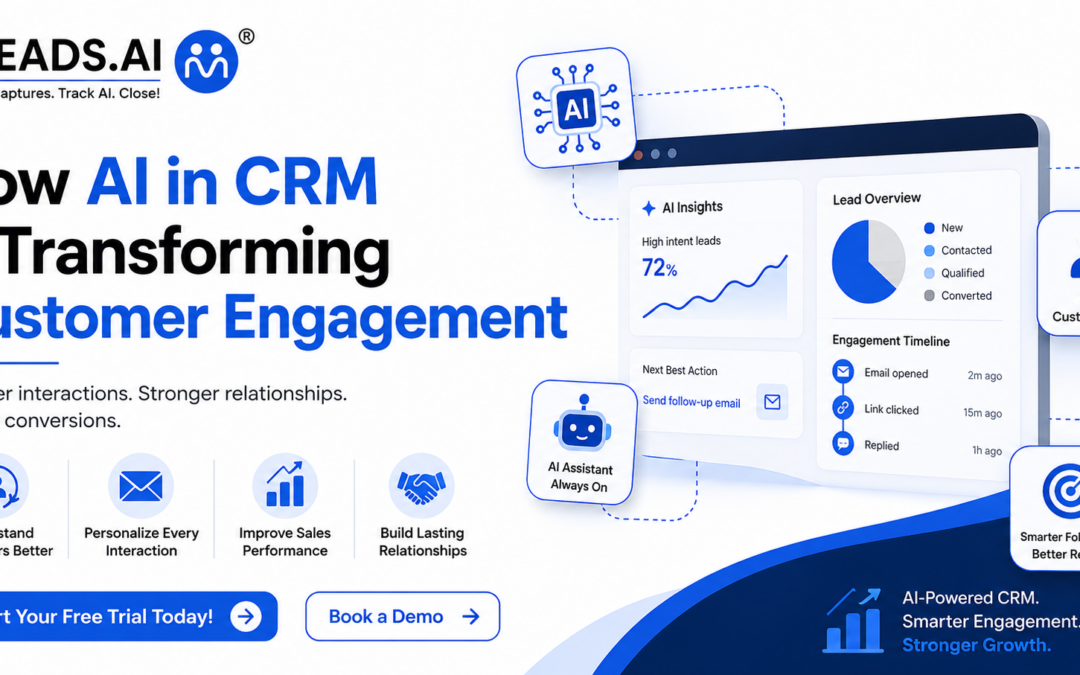
How AI in CRM is Transforming Customer Engagement
Imagine walking into your favorite local coffee shop. Before you even reach the counter, the barista smiles and says, “The usual vanilla latte with oat milk?” You feel recognized, valued, and understood. That micro-moment of connection is the holy grail of customer experience. But how do you replicate that exact feeling when you are managing not just one customer at a coffee shop, but ten thousand customers across global digital channels?
For years, companies relied on Customer Relationship Management (CRM) systems to act as digital Rolodexes—massive databases that kept track of names, phone numbers, and past purchase histories. They were functional, but they were static. Today, a massive shift is underway. The integration of artificial intelligence in CRM is turning these passive databases into active, thinking assistants that help businesses anticipate customer needs before they are even explicitly stated.
Moving Beyond the Digital Rolodex
The traditional CRM era was defined by manual data entry. Sales reps spent hours logging emails, updating deal stages, and typing summaries of phone calls. It was backward-looking technology; it told you what had happened, but gave very little guidance on what should happen next.
By embedding modern data processing directly into these communication hubs, organizations are shifting from a reactive posture to a proactive one. This evolution means algorithms can now scan thousands of data points—from the tone of a recent support ticket to the exact whitepaper a prospect downloaded—to provide real-time recommendations.
This transformation is reshaping how companies view their audience. Instead of seeing customers as static entries in a database, teams can view them as dynamic, evolving relationships that require specific attention at precise moments.
Illuminating the Blind Spots with Deep Analytics
One of the biggest hurdles in modern business isn’t a lack of data; it’s data overload. Companies are drowning in touchpoints, yet they often lack a clear picture of the human on the other side of the screen. This is where modern data processing steps in to surface AI customer insights that would take a human analyst weeks to uncover.
Consider a real-world example from the hospitality industry. A major hotel chain might use these advanced systems to look beyond standard booking histories. Instead of just noting that a guest travels to Chicago four times a year, the system analyzes unstructured data across reviews, customer service chats, and amenities usage. It discovers a pattern: this guest always requests extra hypoallergenic pillows, checks in late, and orders room service breakfast at exactly 6:30 AM.
Armed with these deeper observations, the hotel doesn’t just send a generic discount code. The next time the guest books, the room is automatically pre-set with the correct pillows, a digital check-in link is sent to their phone as their plane lands, and the kitchen is primed for an early breakfast delivery. This isn’t just basic automation; it is a profound understanding of human behavior facilitated by intelligent data processing.
Accelerating the Funnel Across Departments
The wall that historically divided the people who generate interest from the people who close deals is finally crumbling. The strategic implementation of AI in sales and marketing ensures that both teams are working from the exact same playbook, fueled by predictive intelligence.
In a traditional setup, marketing drops leads over a wall to sales based on superficial metrics like job titles or email clicks. This often results in sales reps wasting time chasing cold prospects while warm deals turn cold. When cognitive computing is introduced to the pipeline, the system scores leads based on deep behavioral alignment. It tracks how a prospect interacts with a product trial, compares that behavior to the historical patterns of thousands of successful closed deals, and flags the exact moment a prospect is primed to buy.
For instance, software platforms can automatically alert an account executive when a high-value prospect views a pricing page three times in one morning. The system doesn’t just send an alert; it can suggest the exact case study or testimonial that has historically proven to close deals at that specific stage of the journey. This eliminates the guesswork, allowing reps to focus their human energy entirely on building relationships and solving problems.
The Shift to Preventive Customer Support
The ultimate test of customer engagement happens when something goes wrong. Historically, support has been purely reactive: a customer experiences a problem, opens a ticket, waits in a queue, and hopes for a quick resolution. This model is inherently frustrating because it places the burden of effort entirely on the customer.
Intelligent systems are flipping this script by enabling preventive support. By continuously monitoring product telemetry and system health, platforms can detect anomalies before they impact the user. If a connected enterprise appliance flashes a subtle error code that typically precedes a mechanical breakdown, the underlying system can automatically log a ticket, schedule a technician, and send a message to the client explaining that a fix is already on the way.
When customers do need to reach out directly, conversational interfaces handle routine inquiries instantly, preserving human agents for complex emotional escalations. This hybrid approach ensures swift resolutions without sacrificing the empathy required during high-stakes service failures.
Embracing a Smarter Era of Engagement
The rapid evolution of artificial intelligence in CRM is fundamentally changing how businesses interact with the market. It marks the transition from broad, generic interactions to deeply tailored, meaningful connections. By unlocking rich data pools to deliver actionable AI customer insights and bridging the gap through aligned AI in sales and marketing operations, companies can finally deliver personalization at scale.
The goal of this technological shift isn’t to replace human relationships, but to liberate them. By automating administrative tasks and clarifying data blind spots, organizations free up their teams to focus on what humans do best: listening, empathizing, and building trust. Businesses that lean into this intelligence will find themselves top-of-mind for consumers, while those sticking to old static methods risk fading into background noise.
See what an AI-powered CRM can do for your team.
Explore the platform or talk to our team about your use case.