

Stop losing leads in the gap
See how MLeads captures, organizes, and nurtures every lead automatically
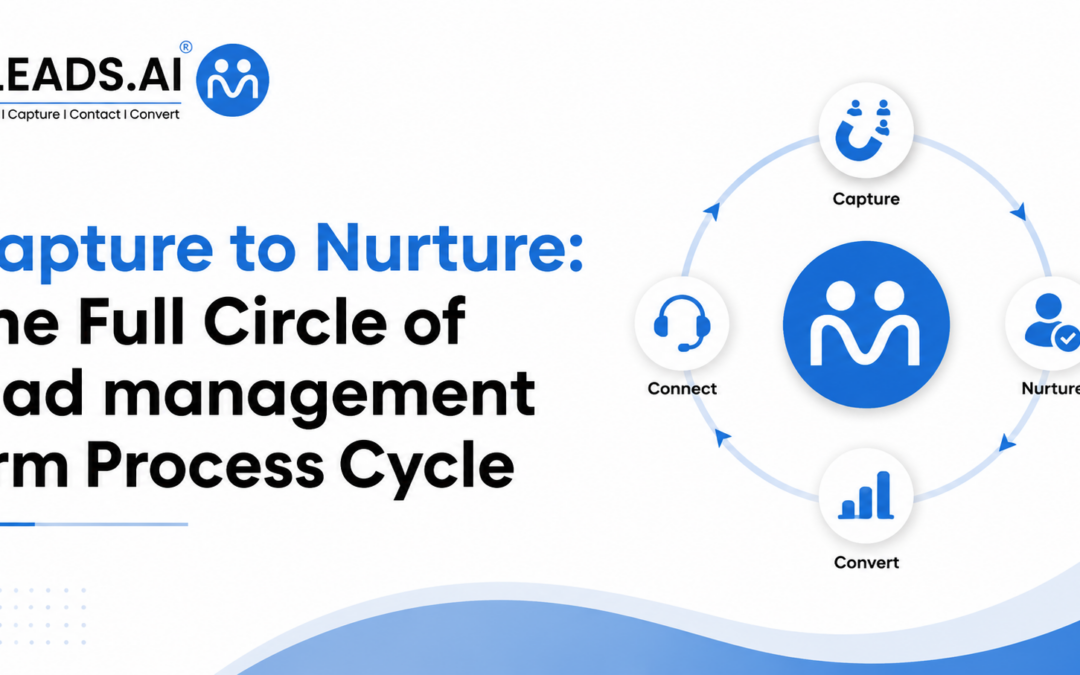
Capture to Nurture: The Full Circle of the Lead Management CRM Process
Every growing business knows the feeling. A sales rep meets a promising prospect at an event. A website visitor fills out a form. Someone scans a QR code, shares a business card, or asks for pricing after a short conversation. A new opportunity has entered the pipeline — and the real question begins right there.
What happens next is where a lead management CRM proves its value. It is not simply a place to store names and phone numbers. It is the system that turns first contact into a trackable journey — capturing interest, assigning ownership, triggering follow-up at the right moment, and measuring what actually converts attention into revenue.
Why the Full Cycle Matters More Than the First Touch
Many businesses pour budget into ads, events, referrals, webinars, and landing pages under the assumption that generating interest is the hard part. But a new inquiry is only the entry point. The real value comes from how quickly and consistently the team acts after that moment — and whether anything is in place to make sure they do.
A well-configured lead management CRM closes the gap between interest and action. It gives sales and marketing a shared space where every new inquiry is recorded, assigned, qualified, and tracked — replacing memory, spreadsheets, and scattered inboxes with one connected workflow.
Think of it as a circle: Capture brings the prospect in. Organization gives them context. Scoring reveals who to prioritize. Nurturing keeps the relationship warm. Follow-up creates movement. Reporting shows what worked — and sharpens the next round.
Stage 1: Capture Prospects Before the Moment Passes
This stage sounds simple, but it is where problems typically begin. A rep returns from a trade show with a stack of business cards. Someone else saves numbers in a phone app. A marketing manager pulls form submissions from one tool and event badges from another. By the time everything is manually consolidated, the best window to reach out has already closed.
A strong lead management CRM supports intake across every channel — QR codes, web forms, imports, calls, SMS, referrals, and face-to-face conversations. This matters especially for field sales reps, event staff, and consultants who need fast, mobile-first logging while actively meeting people.
Quality of Entry Shapes Everything Downstream
A prospect logged without notes is harder to personalize. One filed under the wrong source is harder to measure. Incomplete records slow down qualification later and make every follow-up feel generic. When interest level, source, and next steps are noted at the point of entry, the downstream process becomes far smoother — reps remember the conversation, managers see what drove the inquiry, and marketing learns which campaigns produced real traction. That is where a lead management CRM earns its place as the team’s long-term memory.
Stage 2: Organize Into a Workable Pipeline
A list of names is not a pipeline. Without structure, reps either over-pursue people who are not ready or miss buyers who are. Organization turns raw data into something actionable — grouping entries by event, campaign, industry, product interest, location, status, or assigned owner so that everyone on the team knows exactly where attention belongs.
Good organization is also what makes crm workflow automation reliable. Automated triggers only fire correctly when the underlying data is clean, segmented, and consistent. Without that foundation, automation sends the wrong message to the wrong person at the wrong time.
Segmentation Makes Outreach Feel Relevant
Someone who requested a demo has different expectations than someone who scanned a badge at a booth. A buyer who opened three emails this week is in a different mindset than one who has never clicked anything. Segmentation lets the team match the message to the moment — avoiding the one-size-fits-all approach that drives unsubscribes and ignored calls.
Stage 3: Qualify With Context, Not Guesswork
Not everyone who enters the pipeline is ready to buy today. Some are comparing options, some need internal sign-off, and some are still in early research. Qualification means understanding where each person sits and how much attention they need right now — rather than treating every inquiry as equally urgent.
This is where lead scoring and nurturing become central to the approach. Scoring assigns priority based on fit, activity, and buying signals. Nurturing keeps the relationship progressing even when the prospect is not ready for a direct conversation. Together, they prevent two common failures: ignoring warm prospects and pressuring cold ones before trust has been built.
A solid lead management CRM tracks temperature, engagement history, product interest, meeting notes, and rep activity — giving salespeople the context to continue a conversation rather than restart it from scratch.
Hot, Warm, and Cold Prospects Need Different Paths
| Type | What They Need |
|---|---|
| 🔥 Hot | Quick call, pricing discussion, or a live demo |
| 🌤️ Warm | Education, case studies, comparison content, or a gentle check-in |
| ❄️ Cold | A slower nurture sequence that builds trust before any pitch |
Treating these three groups identically creates friction on both ends. High-intent buyers lose interest during slow follow-up. Cold buyers disengage when the pitch arrives before trust has been established. A clear scoring model removes that guesswork and helps reps direct their energy where it is most likely to pay off.
Stage 4: Remove Delays With Workflow Automation
Manual follow-up is one of the most common reasons buyers go cold. A rep plans to send an email after lunch and gets pulled into a meeting. A manager forgets to assign a new inquiry. A nurture sequence starts three days late. These small delays compound into real revenue losses.
CRM workflow automation replaces those gaps with consistent, behavior-triggered actions. When a prospect is added, the system assigns ownership, creates a task, schedules a reminder, and queues a welcome message — without anyone manually initiating each step. The goal is not to eliminate the human element but to make sure it happens at the right time, every time.
A badge scanned at an event, for example,, can receive a same-day message automatically. If they click a link, their score increases. If engagement does not come after a few days, a second touchpoint goes out. Every action ties back to actual buyer behavior rather than a generic drip schedule.
Automation That Reflects Real Buyer Behavior
The most effective crm workflow automation is behavior-driven, not time-driven. A webinar attendee receives content tied to that session. A prospect who requested pricing gets a direct sales follow-up. One who browsed a product page gets a helpful check-in rather than a cold introduction. This kind of precision keeps communication relevant without asking reps to manually monitor every signal.
Stage 5: Nurture Until the Buyer Is Ready
Most buyers do not decide after a single interaction. They need time to understand the problem, compare alternatives, build trust, and justify the investment internally. Nurturing is what keeps those relationships alive during that window — and it is often the difference between a high-performing sales operation and one that wins only the easiest deals.
Lead scoring and nurturing work best together. Scoring reveals who is becoming more engaged. Nurturing delivers the right content at the right stage — an introduction for someone new, a case study for a mid-funnel prospect, or a direct invitation for someone who has been evaluating options for weeks. Neither works as well in isolation.
Automated Lead Follow Up Keeps Momentum Going
The first 24 to 48 hours after a new inquiry are critical. The conversation is still fresh, and a timely response connects naturally to the original interaction. Automated lead follow up acts during that window — sending an immediate acknowledgment, creating a rep task, or moving the person into a relevant nurture path — so nobody sits untouched while the team handles other priorities.
A thoughtful follow-up rhythm does not stop at one message. A same-day note, a useful resource a couple of days later, a check-in the following week, and a call when engagement signals rise — this kind of structured cadence builds trust without becoming intrusive. Each touchpoint carries context from the one before it.
Stage 6: Give Sales and Marketing One Shared View
Sales and marketing often work toward the same goal but from entirely different systems. One side tracks campaign performance and email engagement. The other tracks calls, meetings, and deal movement. When those data points live in separate tools, buyers experience inconsistency — and internal handoffs become a guessing game.
A shared lead management CRM solves this by creating a single view of the buyer’s journey. Marketing sees which campaigns generate better-quality leads. Sales knows what content was consumed before the call. Managers see ownership, activity history, and pending next steps without chasing anyone for updates. Built-in crm workflow automation reinforces these handoffs — assigning inquiries, creating tasks, and updating statuses so nothing falls between the cracks.
Stage 7: Track Performance and Let the Data Improve Each Round
Without visibility into what is happening at each stage, improving it is guesswork. The right data answers questions that actually matter: Where do buyers stall? Which campaigns produce buyers who convert? Which reps follow up fastest? What is the average time from first inquiry to closed deal?
Dashboards, pipeline reports, email engagement stats, and conversion tracking inside a lead management CRM turn daily activity into actionable insight. A rep can prioritize recently active buyers. A marketing manager can refine subject lines based on open rates. A business owner can compare event-sourced leads against inbound forms and shift budget toward what performs.
This is what makes the whole thing circular rather than linear — reporting feeds back into every earlier stage, making the next automated lead follow up sequence sharper, the next nurture path more targeted, and the next campaign better focused.
Common Mistakes That Break the Cycle
Most breakdowns come from simple gaps: people captured without assigned owners, inquiries stored but never qualified, emails sent without tracking, a single follow-up with no continuation, data collected but never reviewed. Each gap makes the next one harder to close.
A second common failure is over-reliance on disconnected tools — one for intake, another for email, another for notes, another for pipeline visibility. The handoffs between them create delays, duplicate entries, and reporting that nobody trusts. Consolidating these functions into one platform is often the single highest-impact change a growing team can make.
Lead scoring and nurturing also break down when they are treated as a one-time setup. A buyer’s interest changes over time. The approach needs to reflect renewed activity, delayed decisions, and shifting priorities — not lock a buyer in at the score they received on day one.
How MLeads Supports the Full Circle
MLeads is built on the idea that managing a sales pipeline should be simple, mobile-first, and fully connected. For sales reps working trade shows, networking events, or digital channels, the intake process needs to start immediately and continue without manual friction.
The platform covers the full journey — multi-channel intake, group organization, event management, email templates, task scheduling, communication history, and pipeline reporting. As a purpose-built lead management CRM, it serves business owners, sales managers, event teams, and field reps who want to keep pipelines moving without complex setup or heavy admin overhead.
Built-in templates, reminders, and workflows support automated lead follow up the moment a new record is created. Instead of manually chasing who needs attention, users see status, recent activity, and pending actions in one place — so the whole team stays aligned from first touch to closed deal.
Building a Cycle That Actually Holds
A successful sales cycle powered by the right lead management CRM does not need to be elaborate. It needs to be clear. Define how a prospect enters the pipeline, who owns it, how it is qualified, what follow-up looks like at each stage, and how conversion is measured. That clarity is the foundation everything else is built on.
From there, add crm workflow automation at the points where manual steps create the most delay — assignment, reminders, welcome messages, nurture sequences, and status updates. Review reporting regularly to see what is improving and where buyers are dropping off.
Conclusion: The First Touch Is Just the Beginning
A captured inquiry is potential. A nurtured relationship is progress. A closed deal is what a well-run system actually produces.
When each stage connects — intake, organization, qualification, nurturing, follow-up, reporting — sales responds faster, marketing communicates with precision, and leadership gains real visibility into what is driving growth. The right lead management CRM makes that rhythm achievable without requiring a large team or a complex tech stack.
If your business is generating inquiries but struggling to turn them into real conversations, the gap is rarely in lead generation. It is in what happens after. Build the full circle, and every prospect gets a genuine path toward becoming a customer.
Ready to close the gap between capture and conversion?
Join teams using MLeads to capture, qualify, nurture, and convert — all in one place.