

How to Close Deals from Anywhere
Deals are won and lost in the small moments between meetings — not back at the desk. Here’s how mobile-first sales teams capture, qualify, and follow up before the opportunity cools.
A
sales opportunity rarely waits for the “perfect time.” It does not wait until a sales representative gets back to the office, opens a laptop, updates the CRM, writes a follow-up email, and finally remembers the exact details of the conversation. In today’s fast-moving sales environment, deals are often won or lost in the small moments between meetings, events, phone calls, and follow-ups. That is where mobile sales app changes the way teams work.
Imagine this: a sales representative meets a promising prospect at a networking event. The conversation is strong, the interest is real, and the prospect asks for more details. In a traditional sales process, they might take a business card, put it in a pocket, and plan to follow up later. But later becomes tomorrow. Tomorrow becomes next week. By then, the prospect has spoken with another vendor, forgotten the conversation, or simply moved on.
Now imagine a different workflow. The sales representative scans the lead immediately, adds a note while the conversation is still fresh, qualifies the lead, schedules a follow-up task, and sends a personalized message before leaving the event. That is not just faster. It is smarter to sell.
This is the real value of mobile sales management. It helps sales teams stay active, organized, and responsive from anywhere, whether they are at a trade show, in the field, at a client site, or working remotely.
What Mobile Sales Management Really Means
Mobile sales management is the process of managing leads, sales activities, follow-ups, meetings, and pipeline updates through a mobile-first system. Instead of depending only on desktop tools or scattered spreadsheets, sales teams can capture, track, and act on opportunities from their phones.
This does not mean sales become less structured. In fact, it becomes more structured because every important action can happen closer to the moment it matters. Lead capture, qualification, task creation, meeting scheduling, email follow-ups, and sales tracking can all happen while the buyer’s interest is still active.
For small and midsize businesses, this matters because sales teams are often lean. One person may be handling prospecting, event conversations, follow-ups, demos, and closing. When there is no simple system, leads fall through the cracks. A mobile-first approach gives teams a practical way to manage sales without adding unnecessary complexity.
A good mobile sales app supports this process by giving salespeople the tools they need in the field. It should not feel like extra work. It should feel like a natural part of the sales conversation.
Why Deals Are Lost When Sales Teams Wait Too Long
Many deals are not lost because the product is wrong. They are lost because the follow-up is late, the context is missing, or the next step is unclear.
A prospect may show interest during a conversation, but interest is not permanent. The longer a team waits to respond, the more that interest cools down. The buyer may forget the details, lose urgency, or get distracted by other priorities. In competitive markets, speed often becomes a serious advantage.
This is one of the biggest reasons businesses look for mobile sales management tools. They want to reduce the delay between first contact and meaningful follow-up. A strong sales process should make it easy to act while the opportunity is still warm.
Think about the difference between these two follow-ups:
The second message feels more relevant because it is timely and specific. That kind of response is easier when the rep has captured notes, contact details, and next steps immediately.
“The modern sales pipeline is always moving — your process has to move with it.”
Your Pipeline Moves While You Move
Sales no longer happens in one place. A lead may come from a live event, a website form, a referral, a phone call, a QR scan, a business card, or a direct conversation. Buyers expect quick answers, clear communication, and a smooth experience.
That is why mobile sales management is not just useful for field sales teams. It is valuable for business owners, event marketers, sales managers, consultants, real estate professionals, agencies, financial advisors, and any team that depends on lead engagement.
The modern sales pipeline is always moving. A prospect may reply while a rep is traveling. A manager may need visibility while the team is at an event. A sales opportunity may need a task assigned immediately. A lead may need to be grouped, tagged, or followed up before the end of the day.
When these actions are delayed, the pipeline becomes harder to manage. When they happen in real time, the sales process becomes cleaner, faster, and easier to measure.
From First Conversation to Follow-Up
The best sales systems do not start after the conversation. They start during the conversation. That is the core advantage of mobile sales management — a workflow built around three stages.
Capture Leads Before Details Fade
The first step is simple: get the lead into the system immediately. This may sound basic, but it is where many sales teams struggle. Business cards get misplaced. Handwritten notes become unclear. Contact details are entered incorrectly. Event leads sit in spreadsheets for days before anyone acts on them.
A strong mobile workflow solves this by giving users multiple ways to capture leads quickly — business card scanning, QR codes, manual entry, voice notes, badge scanning, or other methods depending on the situation.
The important point is not only speed. It is accuracy. When contact details are captured correctly at the beginning, the rest of the sales process becomes easier. This is where a mobile sales app becomes more than a contact storage tool — it becomes the starting point for the entire sales journey.
Qualify Leads Where the Conversation Happens
Not every lead is ready to buy immediately. Some are highly interested. Some need education. Some may be a poor fit. Others may be valuable but need a longer nurturing process.
With mobile sales management, reps can qualify leads closer to the actual conversation — adding notes, marking interest level, assigning lead status, and organizing contacts into groups. This helps teams avoid treating every lead the same way.
When qualification happens immediately, the team gets better visibility into which leads are worth attention and where the pipeline may be slowing down.
Follow Up Before the Opportunity Cools
Follow-up is where many sales teams lose momentum. The first conversation creates interest, but the follow-up creates movement. A mobile-first system helps reps send timely emails, schedule reminders, and keep communication organized instead of relying on memory.
A timely follow-up does three things: it reminds the buyer of the conversation, gives them a clear action, and shows the sales team is organized. Buyers want to work with businesses that respond clearly and professionally.
How a Mobile Sales App Supports Faster Closing
A mobile sales app should help users move from lead capture to lead conversion without jumping between multiple disconnected tools. The goal is not just to store data — it’s to make sales actions easier.
For example, if a rep captures a lead at an event, the next steps should be simple: add notes, call the lead, send an email, schedule a meeting, or update the lead status — all from the same workspace. This saves time and improves consistency because the process is easier to repeat.
Real-Time Visibility for Sales Managers
Managers can review lead volume, team performance, follow-up status, and conversion activity without waiting for manual updates — creating accountability without constant check-ins.
Communication Without Switching Tools
When notes, emails, and follow-up tasks live in one place instead of scattered across apps, every follow-up becomes more informed and better documented.
Sales Tracking That Travels With Your Team
Updating a lead, setting a task, or checking the pipeline should take minutes, not hours. Simpler tracking means more accurate data — and better decisions.
How to Close More Deals Without Being Tied to a Desk
Many businesses want to know how to close more deals, but the answer is not always a bigger sales team or a more aggressive pitch. Often it comes down to better timing, organization, and follow-through — the teams that win respond faster, remember more context, and guide the buyer clearly to the next step.
Respond While Intent Is High
Reply while the opportunity is still fresh — right after a demo, an event, or a conversation.
Keep Every Next Step Clear
A specific, scheduled next step reduces confusion and makes it easier for the buyer to act.
Use Data to Prioritize the Right Leads
Focus time where the opportunity is strongest, and automate follow-up for leads that aren’t ready yet.
What to Look for in a Mobile-First CRM
Choosing the right system matters. A mobile-first CRM should support the real way your team sells — not force reps into a complicated process that only works on a desktop.
Look for a platform that makes lead capture fast and flexible, especially if you attend events, meet prospects in person, or collect leads from multiple sources. It should also support follow-up management — capturing leads is only the first step; the real value comes from moving those leads into conversations, meetings, and sales opportunities.
Reporting matters too. Managers should be able to review lead activity, conversion progress, and sales performance. And the platform should be easy to use — if it feels heavy, reps will avoid it.
Common Mistakes That Slow Mobile Selling
| × | Capturing leads without context. A name and email are helpful, but notes about the conversation, interest level, and next step make a lead far more valuable. |
| × | Waiting too long to follow up. A lead that seemed excited during a conversation can go cold fast if no one reaches out quickly. |
| × | Leaving ownership undefined. If everyone thinks someone else is following up, no one does. |
| × | Ignoring the reports. Sales data helps the whole team understand which sources, messages, and actions are actually creating results. |
Where MLeads Fits Into Mobile Selling
MLeads is built for businesses that need a simple, mobile-first way to capture, manage, and convert leads — supporting sales professionals, business owners, event organizers, and field teams that cannot afford to let opportunities sit untouched.
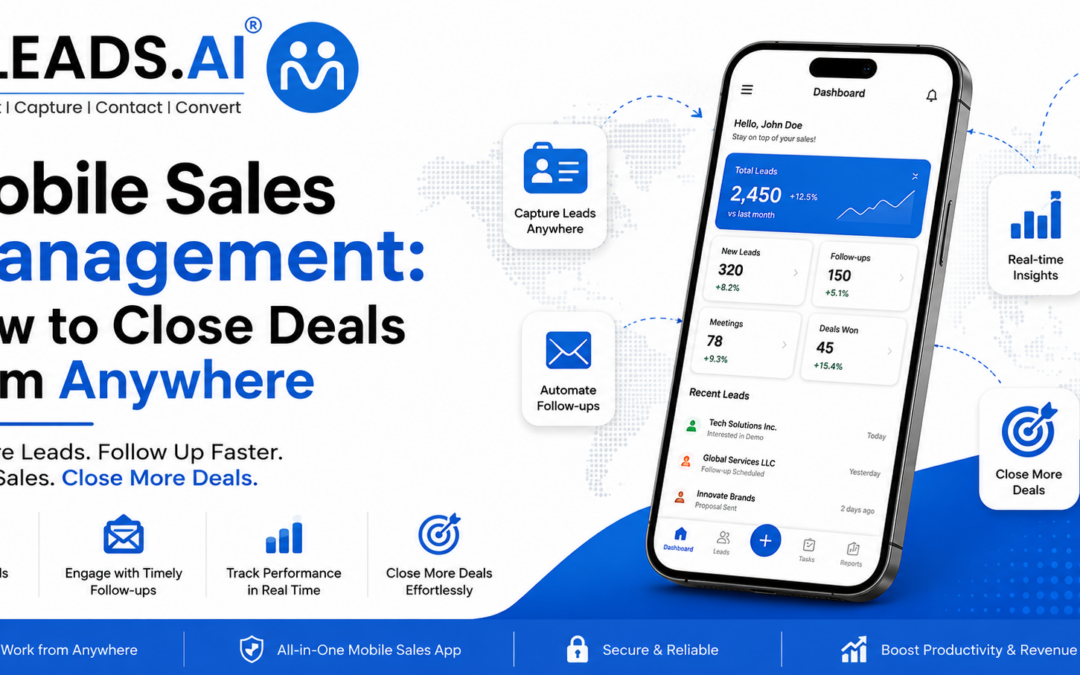
With MLeads, users can capture leads through multiple methods, organize them into groups, manage follow-ups, schedule meetings, use email templates, and track activity from a centralized workspace — covering the full journey from first contact to conversion.
Dashboards and reports add visibility into lead activity, email performance, pipeline movement, and product interest. The value is simple: fewer missed leads, faster follow-ups, and better team coordination.
Why Mobile Sales Management Works for SMBs
Small and midsize businesses often need practical tools. They may not have large sales operations, complex admin teams, or expensive CRM consultants — they need a system that helps them act quickly and stay organized.
A business owner can see where leads are coming from. A manager can track follow-ups. A rep can update the pipeline from the field. An event team can capture and organize contacts instantly — helping teams move from scattered activity to a consistent sales process.
Selling Should Not Stop When You Leave the Office
Sales does not only happen at a desk. It happens in conversations, meetings, events, calls, demos, and quick moments of buyer interest. The businesses that win are often the ones that respond faster and stay more organized.
Mobile sales management gives teams the ability to manage those moments without delay — capturing leads while details are fresh, following up while interest is strong, and tracking sales activity without waiting for office time.
A strong mobile sales app does not replace good selling. It supports it — giving your team the structure, speed, and visibility needed to turn more conversations into real opportunities.
Turn More Conversations Into Closed Deals
Capture, qualify, and follow up — all from your phone, wherever your sales team goes.