

MLeads · Lead Capture & Follow-Up
Turn every lead into a real conversation
Capture, segment, and follow up with leads automatically — before interest goes cold.
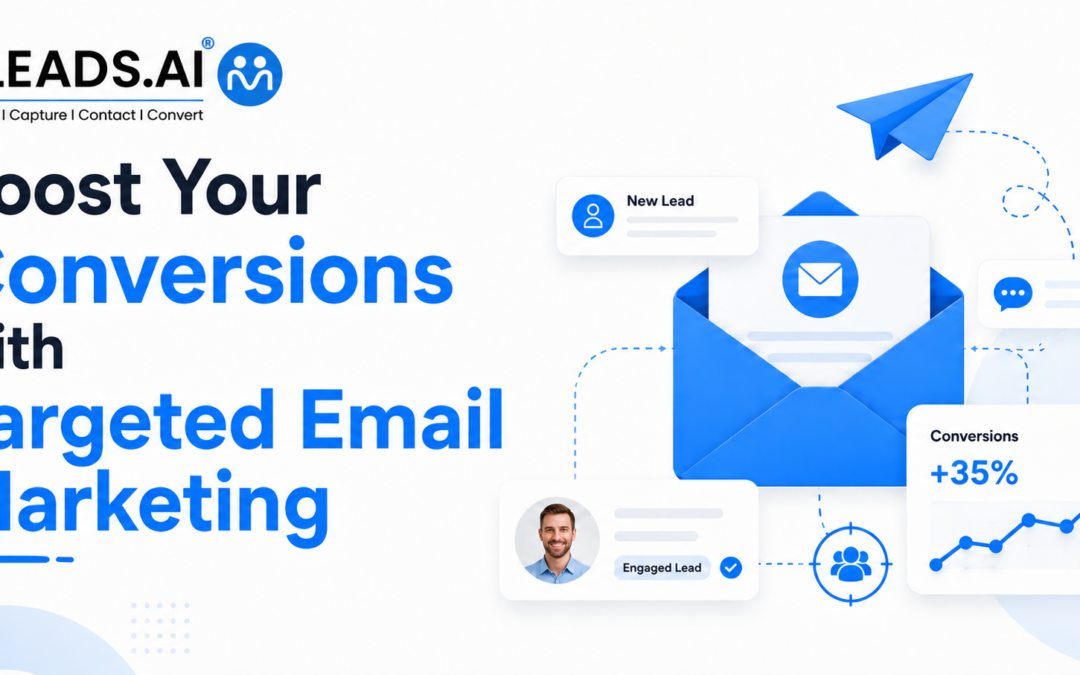
Boost Your Conversions with Targeted Email Marketing in 2026
A lead does not usually become a customer after one message. Someone may scan your QR code at an event, download a guide, ask for pricing, or speak with your team for two minutes at a booth. They are interested, but they are also busy. By the next day, your conversation is competing with meetings, inbox alerts, and other vendors. This is where targeted email marketing becomes powerful. Instead of sending the same message to every contact, you send the right message based on who the lead is, what they need, and where they are in the buying journey.
Think of a small sales team returning from a trade show with 400 new contacts. In the past, they might upload everyone into one list and send a generic “nice to meet you” email. Some people open it, many ignore it, and a few unsubscribe because the message feels irrelevant. But when that same team separates contacts by interest, industry, event source, urgency, and sales stage, the conversation changes. A real estate lead receives a property-focused follow-up. A software buyer receives a product demo invite. A warm prospect receives a meeting link.
For businesses that depend on lead generation, targeted email marketing is not just about sending campaigns. It is about building a smarter follow-up system that keeps prospects engaged until they are ready to act. When paired with lead tracking, email templates, automation, and reporting, it can help sales and marketing teams reduce manual effort and move more leads toward revenue.
Why Targeted Email Marketing Converts Better Than Generic Campaigns
Generic email campaigns are easy to send, but they often fail because they treat every lead the same. A new prospect, a returning visitor, a demo request, and a past customer may all have different questions. When one broad email tries to speak to everyone, it usually connects deeply with no one.
Targeted email marketing works because it respects context. It considers the lead’s source, behavior, interest level, and relationship with your business. A person who just scanned your NFC card at a conference should not receive the same email as someone who has already attended a webinar and compared your solution with competitors. One needs a simple reminder of who you are. The other may need proof, pricing clarity, or a direct invitation to speak with sales.
Targeted email marketing also makes your brand feel more human. Instead of sounding like a mass broadcast, your emails feel like a continuation of the conversation the lead already started. That matters because buyers are more likely to respond when the message feels useful, timely, and relevant to their situation.
The Real Problem: Leads Are Interested, But Not Always Ready
Many businesses assume leads are lost because they are not interested. In reality, many leads are lost because the follow-up is late, inconsistent, or too general. A prospect may be interested today but not ready to buy for two weeks. Another may need to involve a manager. Another may be comparing tools. Without a planned communication journey, these leads slowly go cold.
This is where lead nurturing emails become essential. They help you stay visible without pressuring the prospect too early. Instead of asking for the sale in every email, you guide the lead with helpful content, reminders, product benefits, and clear next steps.
A good nurturing sequence feels like a helpful conversation. The first email confirms the connection. The second provides value. The third addresses a common pain point. The fourth offers a demo or trial. Each message has a job, and together they build trust.
Build Better Segments Before You Write
The strength of targeted email marketing begins before the first subject line is written. It starts with segmentation. Segmentation means dividing your leads into meaningful groups so each group receives content that fits its needs.
A simple way to begin is by segmenting leads based on source. Leads from a trade show may need event-specific follow-up. Leads from a website form may need education. Leads imported from an existing CRM may need re-engagement. Leads from a referral may need a more personal introduction.
You can also segment by interest. If a prospect showed interest in lead capture, send content about QR scanning, business card scanning, or event lead management. If they showed interest in automation, send content about workflows, reminders, and follow-up timing.
The goal is not to create dozens of tiny lists that become hard to manage. The goal is to create practical groups that help you write better messages. When your segments are simple and connected to real buyer behavior, your email strategy becomes easier to execute.
Segment by Lead Source
Lead source tells you what the prospect experienced before entering your database. Someone who met your team in person has a different level of familiarity than someone who clicked a social media ad. A webinar attendee may already understand the problem, while a cold website visitor may still be exploring.
Targeted email marketing becomes more effective when your opening message matches that context. For an event lead, reference the event and the conversation. For a downloadable guide lead, mention the resource they requested. For a demo page visitor, focus on the problem they may be trying to solve. This small detail can make the message feel more personal without becoming complicated.
Segment by Buyer Intent
Buyer intent shows how close a lead may be to taking action. A person who opens three emails, clicks a demo link, and views pricing-related content is more engaged than someone who only joined your list. These two people should not receive the same follow-up.
High-intent leads should receive direct, action-oriented messages. Low-intent leads may need more educational content. Medium-intent leads may respond well to comparison guides, case examples, or problem-solving emails. By matching your message to buyer intent, you help the prospect move forward at a pace that feels natural.
Use Lead Nurturing Emails to Move Prospects Forward
Lead nurturing emails are not just reminders. They are part of a conversion journey. Each email should answer a question, remove friction, or create confidence. The best nurturing emails do not overwhelm readers with too much information. They focus on one idea and one next step.
For example, the first email after an event can simply say, “Great meeting you.” It can remind the prospect what was discussed and offer a useful resource. The second email can explain how your solution solves the specific problem they mentioned. The third can share a short example of how another team improved follow-up speed or lead organization. The fourth can invite them to start a free trial or book a demo.
This style keeps the conversation active without sounding pushy. It also gives your sales team more signals. If a lead opens every email and clicks the same feature link twice, that is a strong sign of interest. If they do not engage, you can slow down the sequence or move them into a lighter newsletter flow.
What to Send at Each Stage of the Customer Journey
A strong targeted email marketing plan matches content to the customer journey. The message a lead needs on day one is different from what they need after comparing options for two weeks.
At the awareness stage, focus on the problem. Help leads understand why manual follow-ups, scattered spreadsheets, and disconnected tools cause missed opportunities. Keep the language simple and practical. The reader should feel understood before they feel sold to.
At the consideration stage, focus on solutions. Show how automation, lead groups, email templates, reminders, and reporting can make the sales process easier. This is where educational content performs well because the lead is trying to decide what kind of solution makes sense.
At the decision stage, focus on action. Invite the lead to start a trial, book a demo, or speak with your team. Make the benefit clear. Instead of saying “contact us,” say “see how your team can capture, nurture, and convert leads from one platform.”
|
Awareness Welcome emails |
Consideration Educational emails |
Decision Conversion emails |
Welcome Emails
The welcome email should confirm the relationship and set expectations. It should be short, friendly, and clear. Thank the lead for connecting, remind them why they signed up, and point them toward one useful action.
For MLeads, a welcome email might invite users to capture their first lead, create an email template, or explore a quick product walkthrough. The goal is not to explain every feature at once. The goal is to create a simple first win.
Educational Emails
Educational emails help prospects understand the value of solving their problem. They can explain how to improve follow-up timing, how to organize leads by group, or how to track campaign performance. These emails are especially useful for leads who are interested but not ready to speak with sales.
When writing educational emails, keep the tone practical. Use real situations your audience understands. For example, “What happens to your event leads after the booth closes?” is more engaging than “Improve post-event workflow efficiency.” Human language keeps people reading.
Conversion Emails
Conversion emails ask the reader to take the next step. They should be direct, but not aggressive. The message should connect the prospect’s problem with a clear action.
A conversion email might say, “If your team is still following up manually, MLeads can help you capture leads, organize them, and send timely emails from one place. Start your free trial today.” This works because it connects pain, solution, and action.
Personalization: Make Every Email Feel Relevant
Personalization is more than adding a first name. A truly personalized email reflects the reader’s interest, timing, and context. It may reference an event, a lead group, a product interest, or a previous action. The more relevant the message feels, the more likely the reader is to continue.
Targeted email marketing gives you a structure for personalization at scale. You do not need to write every email manually. You need smart templates, clean lead data, and segments that make sense. With the right setup, your team can send messages that feel personal while still saving time.
For example, an event organizer may receive an email about post-event follow-up. A sales manager may receive an email about tracking team performance. A small business owner may receive an email about reducing manual work. Each message supports the same product, but the angle changes based on the reader.
Timing and Automation: Follow Up While Interest Is Fresh
Timing can make or break your email results. When someone shows interest, your follow-up should happen quickly. Waiting too long gives the prospect time to forget the conversation, lose urgency, or choose another solution.
Automation helps solve this problem. In targeted email marketing, a simple workflow can send a welcome message immediately, a helpful follow-up two days later, and a demo invitation after the lead engages. This keeps the process consistent even when your sales team is busy.
A practical sequence: same-day welcome → value email after 2 days → use-case email after 4 days → stronger CTA after 1 week. From there, the lead moves into a newsletter, sales follow-up, or re-engagement campaign based on behavior.
Email Marketing Best Practices That Improve Conversions
Strong strategy is important, but execution matters too. Email marketing best practices help ensure your messages are clear, readable, and action-oriented.
Start with the subject line. A good subject line tells the reader what to expect. It should be specific enough to create interest but not so exaggerated that it feels like clickbait. For example, “How to follow up with event leads faster” is clearer than “You won’t believe this sales secret.”
Keep the body easy to scan. Use short paragraphs, natural language, and one main idea per email. Most readers check email quickly, especially on mobile. If your message looks heavy, they may skip it even if the content is useful.
Make your CTA visible and simple. Every campaign should have one primary next step. That might be starting a free trial, booking a demo, reading a guide, or viewing a product walkthrough. When you give readers too many choices, action often decreases.
Write Like a Helpful Advisor
The best marketing emails sound like they were written by someone who understands the reader’s day. Avoid heavy jargon. Avoid overused claims. Speak directly to the problem.
Instead of saying, “Our platform revolutionizes omnichannel engagement,” say, “Your team can capture leads, send follow-ups, and track responses without switching between tools.” Clear language builds trust faster.
Test, Measure, and Improve
Email marketing best practices are not fixed rules that work the same for every audience. Your market, offer, timing, and lead source all influence performance. That is why testing matters.
You can test subject lines, send times, CTA wording, email length, and different offers. You can compare event leads against website leads. You can see whether a demo CTA performs better than a free trial CTA. Over time, these small improvements can create a meaningful lift in conversions.
How MLeads Helps Teams Turn Email Engagement into Revenue
A successful targeted email marketing system needs more than writing. It needs lead capture, organization, follow-up tools, and reporting. MLeads is designed to support this complete flow for sales teams, event organizers, marketers, and business owners.
With MLeads, teams can capture leads through multiple methods, organize them into lead groups, create reusable email templates, schedule follow-up tasks, and track campaign engagement.
The email statistics and campaign overview features are especially useful because they help teams understand delivery, opens, bounces, unsubscribes, and engagement. Instead of guessing whether a campaign worked, your team can review the data and improve the next message.
Conversions are rarely created by one email alone. They come from a connected process: capture the lead, understand the context, send relevant messages, follow up on time, and measure what happens next. When those steps work together, email becomes a real sales growth channel.
Common Mistakes to Avoid
Even a good targeted email marketing strategy can underperform if the basics are ignored. One common mistake is sending every contact the same message. Another is writing emails that talk too much about the company and not enough about the customer’s problem.
A third mistake is waiting too long after lead capture. If a prospect meets your team at an event, the first follow-up should happen while the conversation is still fresh. A fourth mistake is ignoring data. If people are not opening, clicking, or responding, the campaign needs adjustment.
Finally, avoid sending emails with no clear next step. Every message should guide the reader somewhere useful, such as reading a guide, watching a demo, replying with a question, or exploring a feature.
Better Emails Create Better Sales Conversations
Targeted email marketing helps businesses stop treating leads like a list and start treating them like real conversations. When your messages are segmented, timely, personalized, and connected to buyer intent, your follow-up becomes more useful for the customer and more effective for your team.
The best results come from combining strategy with the right tools. Build practical segments. Use lead nurturing emails to keep prospects engaged. Follow email marketing best practices to improve readability and action. Track your results so every campaign becomes smarter than the last.
Ready to capture, nurture, and convert from one platform?
If your team wants to capture leads faster and automate follow-ups, MLeads can help simplify the process from first contact to conversion.